Wednesday, July 8. 2015
A pessimistic conclusion about what data science means


(Note: This is a rant, so what I’m trying to say is possibly written between the lines.)
2012, three years ago, I was working in the context of computer vision, teaching computers to see. While this is still an exciting field, yielding exciting technology, no one is really making money there so far, because these are solutions looking for a problem—there is no itch to be scratched. Our department was selling tunnel surveillance systems to the traffic industry, which was quite a niche and didn’t contribute to getting our company out of financial trouble. I started a learning phase, trying to get deeper into that machine learning thing, seeing myself as a technical expert in a few years, being known for bringing complex theoretical concepts to life in successful solutions—at a place where such skills throw off money.
During generic research I collected more and more knowledge about the new hot field called data science, a magical mixture of statistical modeling and modern computer technology with its application in business. Since media mentioned IBM as player in the first row, I got in touch with their local office. And really, they hired me! However, I found myself placed onto the wrong track: I was expected to ensure that others do the work I was interested in doing, to generate projects, to devise proposals from zero to signings, to tell bank reps that they had to understand their customers as individuals to compete in today’s market. I was definitely not needed as a mathematician with a knowledge of data mining algorithms there. They needed business economists, marketers and sellers with an understanding of industries. The actual work that I was interested in doing—hacking fancy predictive models—would be delivered by folks who work at external business partners. How could that have happened? Both sides seemed to have had different expectations and interpretations. So, I was immediately job hunting again, and data science disappeared from my career radar during my way back to the software engineering world.
At my current employer, I’m somewhat known as the guy who knows about big data (although I haven’t ever tried Hadoop) and data mining (although some of my coworkers are “real” statisticians). But during the recent months I concluded that all this data science is just one good old thing: marketing. The big part that actually defines data science is totally not explained by its name: It’s definitely and exclusively solving business problems. Data mining, on the other hand, has different interpretations. I, too, was blinded by what tech people see when hit with this buzzword: Hadoop, MapReduce, statistical algorithms, other fancy formula-heavy or technological stuff, applied to data of manifold origin. The business folks however have that marketing interpretation:
Data mining is finding more people to sell stuff to.
Data mining is market basket analysis (what stuff people buy), upselling (more expensive stuff), cross-selling (additional other stuff), understanding a company’s customers (people who buy stuff) to prepare marketing campaigns (telling people to buy stuff). Hey, business analyst, find more people to sell our stuff to! Oh, you’re a data scientist? Well, what difference does it make? Find more people—they might be customers already, possibly thinking about leaving us, or they aren’t our customers just yet. Or, possibly create a new product. Data mining is also about creating more stuff to sell to more people.
So, be careful not to mistake data science with data mining. As a data scientist, you won’t just practice R programming, cleaning data, data analysis, statistical inference, or creating data products. If someone wants to hire a data scientist, they are looking for a business professional who, pointing at data in a spreadsheet, tells CEOs how they should transform their company. See, sometimes, someone tries to headhunt me for “[…] acting as a partner for marketing executives and collaborating with colleagues in management accounting […] Developing procedures to measure marketing campaigns on a global level together with managers and executives in marketing and sales […] identify new business opportunities […] Demonstrate business acumen […]”.
Only rarely it goes like “[…] work with complex, varied, high-volume data sets that have real meaning for our customers’ health and wellbeing […] Identify patterns and correlations of a user’s fitness data […] Good statistical, mathematical and predictive modelling skills to build the algorithms […]”—Wait, what, Runtastic are Austrian!? (Or rather: Runtastic are awesome although they are Austrian!?)
Maybe that topic comes back to me once that pile of sensor data has become higher and the internet of things takes off. But I’m not in my twenties anymore, so the doors and clefts to slip through have become narrower.
Monday, March 30. 2015
Wo das Netz nicht gar so dünn ist, IV

Bzgl. Netzzugang kommt langsam das Mobilnetz ins Spiel: Die A1 Telekom öffnet nun 4G/LTE für alle, allerdings nur von der Netzfrequenz her und ggf. mit einer Geschwindigkeitsbeschränkung je nach Tarif. Ich habe an meinem ländlichen Wohnort auf 4G gestern 20 Mbps Downstream/2 Mbps Up gemessen, was ganz OK ist und über meiner ursprünglichen Annahme von 10 Down liegt. Mir nützen diverse Geschwindigkeitsoptionen oder -fortschritte aber genau garnichts, solange ich entlang meiner Bahnstrecke oder hinter den Mauern meines Arbeitgebers in der Wiener Innenstadt(!) überhaupt um Internetzempfang kämpfen muss. (Und die ÖBB putzt sich in der WLAN-Diskussion ausgerechnet an 4G/5G ab.) So fad, dass ich YouTube schauen muss, ist mir zum Glück selten.
A1 hatte für mich Juli bis Oktober 2014 wegen eines Smartphone-Kaufs die LTE-Option gratis aktiviert. Ich war wirklich öfter auf 4G aktiv, und es war ziemlich flott, einmal ~30 Mbps Upstream! Nach Auslaufen der Option habe ich sie nicht vermisst. Problematisch ist zudem eine nötige Preissteigerung im doppelten Sinn: Mehr Speed verlangt eigentlich auch nach mehr Volumen. Ich möchte mit meinen 2 GB/Monat, die ich seit 2011 habe, noch längere Zeit Auslangen finden.
Ach ja, und das Glasfaser Power 30 Paket erhöht sich von 9,90 auf 12,90 €/Monat.
Thursday, September 18. 2014
Zero-knowledge cloud storage considerations
I’m using Wuala’s cloud storage for some years now, and I tried to challenge the status quo to see if there are better alternatives available in the meantime. The main requirement for me is a zero-knowledge provider, a provider that does not know my password and cannot decrypt my data (without brute force). I found these candidates:
Wuala, Tresorit, SpiderOak, MEGA, SeaFile
(Note that SeaFile is a self-hosted open-source solution.) The next requirement is location: Servers should not be located in the USA, and there should be an Android client that supports upload ...
Wuala, Tresorit, SpiderOakDouble-Plonk!, MEGA, SeaFile
... and there should be an official Linux client ...
Wuala, TresoritPlonk!, MEGA, SeaFile
... and the service shouldn’t require exotic TCP ports such that clients work behind a corporate firewall ...
... and the service should support file revisions, download on demand only, and files should stay encrypted on client exit ...
Wuala, MEGATriple-Plonk!
Way to go, Wuala!
Saturday, June 21. 2014
Android smartphone coming up, III
I’m adding to my phone history:
A look back at the Galaxy Nexus
I only noticed recently that this phone never had a “Samsung” tag at all; while Samsung indeed was the hardware manufacturer, that device simply was a Google phone.
Surprisingly, I was less into rooting/modding with this phone than I was with my first Android phone, the Motorola Milestone, although the pureness and openness of the Nexus devices was dedicated to such purposes. Maybe because Android 4 finally featured a lot innately: Useful home screen, editing contact groups & birthdays, taking screenshots, mobile data usage control, unlocking by face recognition, panorama camera mode, rich notifications, better search, better messaging. I only rooted it once it was clear there won’t be any further updates; I did so to be able to use advanced anti-theft features. But now it’s beginning to bug me that the hardware (RAM) is getting old (small); the phone is lagging a lot if the uptime reaches one week. I had to turn off various useful but RAM-eating services, like, live wallpapers. Well, it’s 2½ years old.
Mentioning Android features, I wouldn’t be surprised if the Google Now experience becomes the actual core in the future, making devices smart and active companions that exactly know about their users’ habits.
... and the AppIe ¡Phone
Yes, I used an ¡Phone 4 for some months. I didn’t find it that intuitive like it was always praised; e.g., where do you find email settings? No, not at all in the email app, but in the system settings! Also, the ¡Phone has no idea of the concept of widgets or background services. There is no such thing as a third-party keyboard with swipe gestures and text prediction, or a service that changes settings according to detected current conditions. AppIe physically seals phones and notebooks, tries to trick users into buying entirely new devices by making component upgrades expensive or impossible. Yet, ¡People only seem to care about the smoothness of animations. Whoever buys AppIe, it’s their own fault.
Coming up: Samsung Galaxy S5
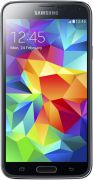 I somehow drifted away from praising Google’s “pure Android” experience, although they drive core innovations. Having used my first “real” Samsung device, the NotePRO tablet, for some time, I came to appreciate the AppIe-like benefit (what!!1) of an interlinked environment: Samsung devices are “magically” in touch with each other—I can remote control both my TV and my sat receiver/HDD recorder/Blu-ray player (but, strangely enough, not my microwave), I can stream pictures, videos and even my whole UI screen to my TV over the freakin’ air. I mean, totally on their purpose and without me “hacking” anything. It’s no longer Android or Google integration that’s exciting to me, it’s the Samsung experience. I don’t mind TouchWiz as long as they have a mission behind it. (OTOH, the Samsung store praises cheap and foolish third-party apps exclusively, it’s totally pointless to search for apps there, IMO.)
I notice, Samsung is the new Nokia: Every jerk has got one—people who don’t know how to mute their phones or change the standard sounds. I’m the next in line!
... and the Gear Fit
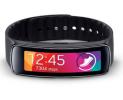 In addition, I’m leering at Samsung’s health-centric smartwatch Gear Fit, as it perfectly integrates into their (or my) device environment.
Do they also build toothbrushes?
Saturday, February 15. 2014
How to root the Galaxy Nexus
... GSM version (Maguro) with Android 4.3 from GNU/Linux
I found so many incomplete tutorials written in bad English that I decided to write one myself and keep it simple. You must have your phone’s bootloader unlocked; doing so will wipe your device!
- Watch this tutorial video.
- Download the fastboot and adb binaries, e.g. from the Universal Nexus Linux Toolkit. Extract the archive on your machine. Find the binaries.
The problem with this toolkit is that the bundled zips are rather old and didn’t work for me, so: - Download the ClockworkMod recovery image from here.
- Download the SuperSU zip file from here.
- Connect your phone to your PC via USB.
- Boot your phone into bootloader mode: Power it off, push both the volume rocker up+down and then press the power button, i.e., press all three at once for about two seconds.
- ./fastboot oem unlock if you haven’t ever done it. This will wipe your device, reset it to factory settings and delete all your data. Yes, really.
- ./fastboot flash recovery /path/to/recovery-clockwork-6.0.4.7-maguro.img
- Now load the recovery: Volume button down twice to choose Recovery mode, power button to select.
- Navigate using the volume rocker: “install update from zip”, press power button to select, choose “install zip from sideload”, press power button.
- ./adb sideload /path/to/UPDATE-SuperSU-v1.93.zip
- Navigate back and reboot normally. Your installed apps should now show SuperSU installed.
Have fun!
Sunday, January 12. 2014
My quest for a tablet, II
Shortly after I had published my first post in this series, rumors about a large (12.2”) high-resolution (2K) Note-branded Samsung Android tablet turned up. I followed those rumors closely until the sudden reveal of the Galaxy NotePRO at CES a few days ago!
This device finally seems to fit my original requirements, tailored around “active” reading:
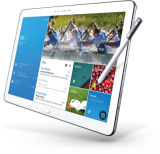 High-resolution screen for perfect font rendering (247 ppi); LCD in favor of e-ink due to versatility,
- Large screen for displaying A4-/Letter-sized or magazine pages in (almost) their original size,
- Dedicated stylus input for on-screen and in-document annotations in form of free-hand text, graphs, arrows, and formulas.
I still get opinions that even 10” tablets are too large & heavy and 8” are about right; anything larger ought to be a MS Windows 8 notebook. But MS does not play a role in my personal computing setup. I really do care about the points listed above.
A different point is software updates. I'm an update geek regarding Android, but in this case my focus is on the stylus software features (consider search by hand-drawn shape—yes, it works!), so I don't mind Samsung's TouchWiz UI or the possible lack of OS updates, especially since Samsung has finally fixed some long criticized issues. And it's based on the still fresh Android 4.4 after all, while my Galaxy Nexus is now stuck to 4.3.
Originally, I wanted such a device for a better workflow of reading scientific publications for work. Too bad my job has meanwhile changed... twice. But I will still make use of its features for “active” reading (annotating) of math/CS literature and for conceptual work, as well as for image editing.
Wednesday, December 4. 2013
grub rescue >

My boot partition was so small that I couldn’t do any initramfs-updates any more, so I backed it up, deleted /dev/md0 (boot) and /dev/md1 (swap) to recreate both with new sizes, restored my backup, and after a reboot grub couldn’t find anything due to the new UUIDs of the partitions. 
Before I rebooted, I should have merged the output of
Instead, I had to go through this:
At grub rescue prompt:
... bringing me to a BusyBox/initramfs emergency prompt:
... bringing me to a simple bash prompt in my system:
... as well as:
... to be able to run:
You wouldn’t learn much if you weren’t forced to fix things once in a while. — myself
Wednesday, November 27. 2013
Server migrated from virtual to virtual, II
Quote of myself from four years ago:
I had to do the migration to a parallel machine and had only one week to accomplish this. I’ll never do it this way again, however, rather pay for two servers for a short time and decide when to finally switch.
This is exactly how I did it this time.
Although Debian 5 lenny had been released in Feb 2009, it didn’t yet make it into Host Europe’s 4.0 line of virtual servers; instead, that virtual machine was still based on 2007’s Debian 4 etch, which received its last kernel update, still 2.6.18, by the provider in Aug 2011. I upgraded it to Debian 6 squeeze nonetheless. I noticed that this year’s Debian 7 wheezy does not run under an etch kernel (especially libc6, rkhunter and aide), and as squeeze is already oldstable since May and will no longer be maintained by next May, it was time to perform an upgrade.
Now I run an instance of their 7.0 line with the same price, but RAM and disk space were both doubled (to 2 GB and 100 GB, respectively). It is still based on squeeze with a 2.6.32 kernel; based on my experience, I expect it to run wheezy and jessie before I have to switch again (in about another four years).
Like previously (and like seven years ago), I did the TCP forwarding using rinetd, except for Postfix, for which I set up relaying again.
Calendar

|
September '26 |

|
||||
| Mon | Tue | Wed | Thu | Fri | Sat | Sun |
| 1 | 2 | 3 | 4 | 5 | 6 | |
| 7 | 8 | 9 | 10 | 11 | 12 | 13 |
| 14 | 15 | 16 | 17 | 18 | 19 | 20 |
| 21 | 22 | 23 | 24 | 25 | 26 | 27 |
| 28 | 29 | 30 | ||||
Quicksearch
Archives
Categories

Show tagged entries
Follow me





